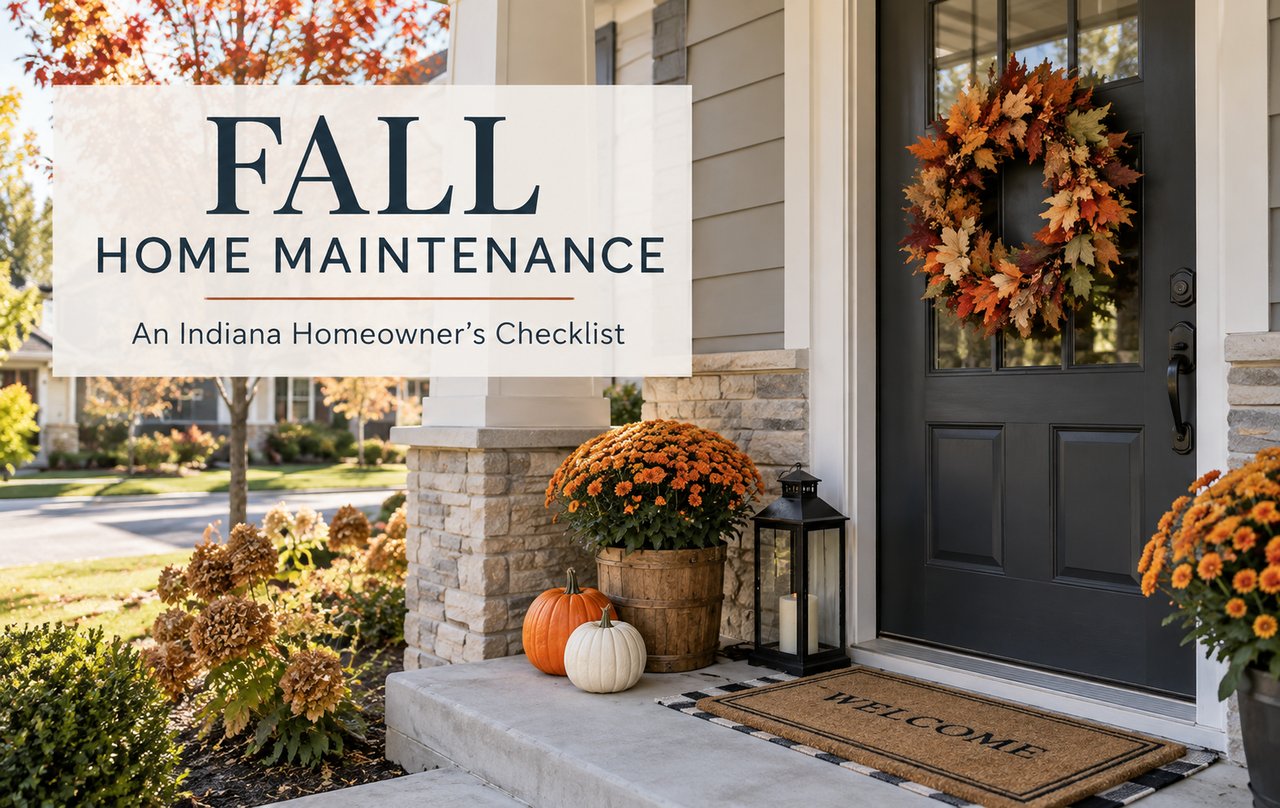
Fall Home Maintenance Checklist for Indiana Homeowners: What to Do Before Winter Arrives
It may still feel like summer outside, but the calendar says otherwise. Fall is almost here in Indiana, and if you’ve lived here long enough, you know how quickly our weather can change.
One week we’re running the air conditioning and complaining about 90-degree temperatures. A few weeks later, we’re digging through the closet looking for jackets and wondering if it’s too early to turn on the furnace.
That makes September and early October a great time to start tackling fall home maintenance. You don’t have to do everything in one weekend, either. Make a list, knock out a few projects at a time, and get your home ready before freezing temperatures and winter weather arrive.
Here are some of the fall maintenance items I recommend Indiana homeowners put on their list.
1. Clean Your Gutters & Check Your Downspouts
Those beautiful Indiana fall leaves aren't quite as charming when they're packed into your gutters.
Clogged gutters can prevent water from draining properly away from your home. As temperatures drop, trapped water can also freeze and create additional problems.
Angi’s Tip: Don't do this one too early! If you have mature trees around your property, wait until the majority of the leaves have fallen before doing your final gutter cleaning of the season.
While you're cleaning, check that your downspouts are securely attached and directing water away from your foundation, rather than dumping it right next to the house.
Look for:
- Loose or sagging gutters
- Clogged downspouts
- Water stains or signs gutters have been overflowing
- Downspouts that have become disconnected
- Areas where water pools near your foundation
If getting on a ladder isn't something you're comfortable doing, this is a great task to hire out.
2. Give Your Roof a Quick Inspection
You don't necessarily need to climb onto your roof to give it a basic inspection.
Stand back from your home and look for missing, damaged, curled or lifted shingles. Also pay attention to flashing around chimneys, vents and other roof penetrations.
If something looks questionable now, have a roofer take a closer look before winter weather arrives.
Angi’s Tip: Use the zoom on your phone camera or a pair of binoculars to get a closer look from the ground. There's no reason to turn fall maintenance into an unexpected trip to the emergency room!
While you're looking up, also check nearby trees for dead or damaged limbs that could come down during a winter storm.
3. Disconnect Your Garden Hoses & Winterize Outdoor Faucets
This one is simple, inexpensive and REALLY important.
Before our first hard freeze, disconnect all garden hoses from your exterior faucets. Drain the hoses before storing them for winter.
If your home has shutoff valves for the exterior faucets, turn off the water supply and drain the remaining water from the line. You can also add inexpensive insulated faucet covers for additional protection.
Have an irrigation system? Put winterizing it on your fall calendar as well.
Angi’s Tip: Don't wait until the weather forecast calls for freezing temperatures. Do it when you're finished regularly watering your landscaping for the year and cross it off the list.
Frozen plumbing can turn a five-minute maintenance task into a much more expensive repair.
4. Schedule Your Furnace Check BEFORE You Need the Furnace
The first freezing night of the year is a terrible time to discover your furnace isn't working.
Turn your heat on for a test run before temperatures drop significantly. Listen for unusual sounds and make sure warm air is coming from the vents.
Fall is also a good time to:
- Change your furnace filter
- Check your thermostat and replace batteries if needed
- Make sure vents and returns aren't blocked by furniture
- Schedule an HVAC tune-up if your system is due for service
Angi’s Tip: Write the size of your furnace filter in the Notes app on your phone. Then you'll actually know what size to grab the next time you're standing in the store staring at a wall of filters!
5. Check Windows & Exterior Doors for Drafts
Walk around your home and inspect the caulking around windows and doors.
Look for cracked, missing or deteriorating caulk and check your exterior doors for worn weatherstripping.
An easy test? On a breezy day, slowly move your hand around the edges of windows and doors. If you can feel outside air coming through, you've found an area worth investigating.
Angi’s Tip: Pay particular attention to older windows, exterior doors and doors leading into an attached garage. Small gaps don't seem like much in September, but you'll notice them when that January wind starts blowing.
6. Walk Around Your Foundation
This might be one of the most overlooked homeowner maintenance tasks.
Take 10 minutes and walk completely around your house.
Look for:
- New or growing cracks
- Areas where soil has settled
- Standing water
- Downspouts draining too close to the house
- Openings where pests could enter
- Damaged siding or trim
- Cracks or gaps around exterior penetrations
You aren't necessarily looking to diagnose a problem yourself. You're simply looking for something that has changed.
If you see something concerning, take a picture. You can compare it later or send it to the appropriate professional for an opinion.
7. Check Your Sump Pump
If your home has a basement or crawl space with a sump pump, don't forget about it.
Make sure the pump is operating properly and check that the discharge line isn't clogged or damaged.
If you have a battery backup, fall is a good time to make sure that's working too.
Angi’s Tip: Don't wait for a major rainstorm or winter thaw to find out your sump pump isn't working. Testing it periodically is one of those boring homeowner jobs that can potentially save you from a very exciting—and expensive—problem later.
8. Inspect Your Driveway, Sidewalks & Exterior Concrete
Indiana's freeze-and-thaw cycles aren't particularly kind to concrete.
Look for cracks in your driveway, sidewalks, steps and patio. Water can work its way into cracks, freeze, expand and potentially make existing damage worse.
Small cracks may be easier to address now than after another winter.
Also check exterior steps and handrails. Make sure everything is secure before you're trying to navigate those same steps covered in snow or ice.
9. Prepare Your Lawn & Landscaping
Your yard may be getting ready to go dormant, but there are still a few things you can do now to help prepare it for spring.
Depending on your lawn and landscaping, fall can be a good time to:
- Remove excessive leaves from the lawn
- Clean up dead annuals and garden debris
- Trim appropriate plants and shrubs
- Aerate and/or overseed the lawn
- Apply fall fertilizer when appropriate
- Clean up around trees and landscaping beds
Be careful about aggressive pruning, though. Not every tree, shrub or perennial should be cut back in fall.
Angi’s Tip: Take pictures of your landscaping before everything goes dormant. If you're planning changes next spring, you'll have a much better reference for what was growing where.
10. Clean Up Your Outdoor Living Spaces
We Hoosiers like to squeeze every possible weekend out of our patios, decks and fire pits, so I'm not suggesting you pack everything away just because the calendar says fall!
But start making a plan.
Clean and cover or store patio furniture that won't stay outside all winter. Empty planters that could crack during freezing weather. Clean your grill and decide where you'll store cushions, umbrellas and other seasonal items.
While you're outside, inspect decks, porches, stairs and railings for loose boards or hardware.
And yes—you can absolutely leave the fire pit accessible. Fall fire-pit season is one of the rewards for completing this list!
11. Check Smoke & Carbon Monoxide Detectors
We're about to enter the season when furnaces, fireplaces and other heating sources are being used regularly again.
Test your smoke detectors and carbon monoxide detectors and replace batteries as needed.
Check the expiration dates on your fire extinguishers, too.
If you have a fireplace or wood-burning stove, have the chimney and flue inspected and cleaned when needed before using it for the season.
Angi’s Tip: Make this part of your fall AND spring home-maintenance routine so it doesn't get forgotten.
12. Locate Your Main Water Shutoff
Here's one homeowners often don't think about until there's water spraying somewhere it definitely shouldn't be.
Do you know where your home's main water shutoff is?
If not, find it now.
Make sure you know how to operate it and that other adults in your household know where it is too.
Take a picture and save it in your phone—or even put a small label nearby.
When there's a plumbing emergency, knowing how to quickly shut off the water can make a big difference in how much damage occurs.
BONUS: Create a Home Maintenance Photo Album on Your Phone
Here's one of my favorite homeowner organization tips.
Create an album on your phone called HOME MAINTENANCE.
Use it to save pictures of:
- Furnace filter sizes
- HVAC model and serial numbers
- Water heater information
- Appliance model numbers
- Main water shutoff
- Electrical panel
- Paint colors
- Roof or exterior repairs
- Before-and-after maintenance pictures
- Receipts and warranty information
Future you will be very thankful.
And someday when you sell the house, having records of updates and maintenance can also make it much easier to remember what you've done and when you did it.
Don't Try to Do Everything in One Weekend
Homeownership comes with a never-ending to-do list. The goal isn't to have a perfectly maintained house every second of the year. The goal is to stay ahead of the little things before they have the opportunity to become bigger—and usually more expensive—things.
Start your fall checklist while we're still enjoying these warm September days in Central Indiana. Do a few projects each weekend, hire professionals for the jobs outside your comfort level, and aim to have the important winterization projects completed before freezing temperatures arrive.
Then you can move on to the really important fall decisions...
Like how early is too early to put pumpkins on the front porch?
Personally, I vote that October 1st is fair game. 🎃
Thinking About Selling in the Next 6–12 Months?
Here's one more reason I love encouraging homeowners to stay on top of seasonal maintenance: the best time to prepare your home for sale isn't two weeks before the sign goes in the yard.
If you're considering selling your Greenwood, Center Grove, Bargersville, Franklin, Whiteland or Johnson County home sometime in the next year, let's start the conversation early.
I can walk through your home with you and help identify which projects may be worth tackling, which ones can probably wait, and where I would—or wouldn't—spend money before putting your home on the market.
Sometimes the best pre-listing strategy starts months before you're actually ready to move.
Angi Oakes | Oakes Realty Group
REALTOR® | Trusted Advisor
We are here when life moves you.